English
 français
 Español
 русский
 português
 العربية
 tiếng việt
 Türkçe
 ไทย
ไทย Indonesia
Pharmaceutical production demands a different standard of industrial cleaning. The objective is not only to remove visible residue but also to manage fine powder, support housekeeping discipline, redu...
Read More
Pharmaceutical production demands a different standard of industrial cleaning. The objective is not only to remove visible residue but also to manage fine powder, support housekeeping discipline, reduce cross-contamination risk and keep production areas easier to control. That is why selecting a vacuum cleaner for pharmaceutical industry applications requires more than comparing suction power.
Tablet, capsule, powder and packaging operations can generate residues that are fine, highly mobile and process-sensitive. Some production areas prioritize hygienic design and easy cleanability. Others focus on fine-powder recovery during maintenance or product changeover. Certain powders may also require additional consideration for static or combustible-dust behavior.
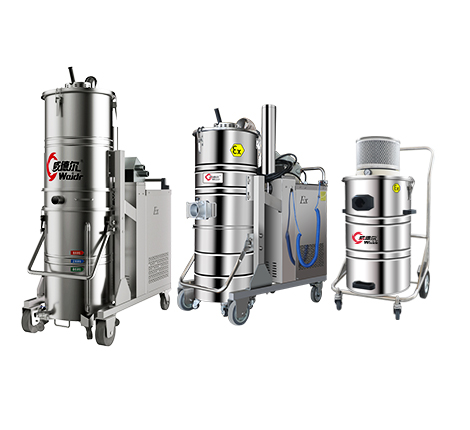
Waidr’s biopharma-oriented vacuum solutions provide a useful framework: configurable high-efficiency filtration, stainless-steel construction options, hazardous-dust configurations and solutions intended for controlled production environments. Applicable Waidr configurations reference HEPA filtration performance of approximately 99.97% at 0.3 μm, which provides a concrete benchmark when high-efficiency fine-particle capture is required.
This guide explains how pharmaceutical and biopharma facilities can evaluate vacuum systems according to process area, powder type, filtration requirement, cleaning workflow and safety considerations.
A vacuum cleaner for pharmaceutical industry applications is an industrial vacuum selected to recover powders and process residues in controlled production environments while supporting hygienic cleaning, filtration control and application-specific safety requirements.
This is not one universal machine category. The correct equipment depends on whether the plant is cleaning around a tablet press, capsule filler, blending area, packaging line, laboratory or maintenance zone.
The collected material may be active powder, excipient dust, granules, packaging residue or mixed contamination generated during changeover.
For that reason, pharmaceutical vacuum selection should be approached in much the same way as process equipment selection. Material compatibility, cleanability, filtration and operator handling directly affect whether the machine is appropriate.
A vacuum cleaner for pharmaceutical industry differs from a standard workshop vacuum because pharmaceutical cleaning involves fine-powder control, cleaner handling and contamination-management requirements beyond ordinary housekeeping.
A conventional vacuum may be perfectly adequate for rugged workshop residue, but pharmaceutical environments often require greater control over how fine particles are collected, retained and removed from the equipment.
Buyers may also need to consider how the drum is emptied, how filters are serviced and whether cleaning the vacuum itself could release collected powder back into the room.
These considerations change the procurement conversation. The machine is no longer evaluated solely on suction strength. It is evaluated on how reliably it supports the facility's cleaning procedure.
A vacuum cleaner for pharmaceutical industry should be selected according to both the powder type and the production area where cleaning occurs.
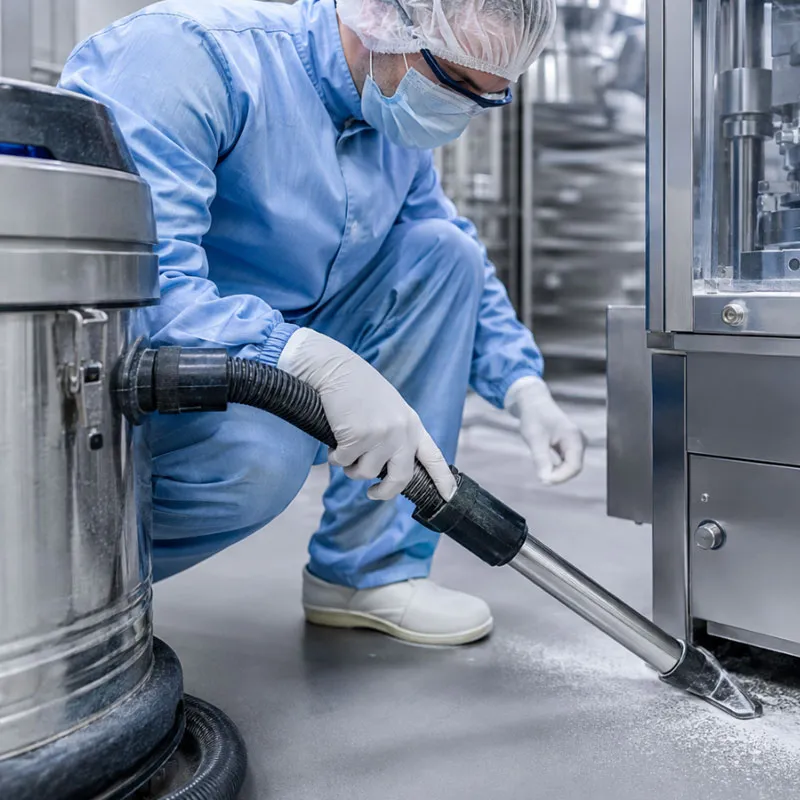
Powder-handling rooms may generate fine airborne residue around transfer or dispensing points. Tablet and capsule departments can accumulate material near presses, encapsulation equipment and feed systems. Packaging areas usually require more routine housekeeping rather than high-volume powder collection.
Maintenance teams may also use industrial vacuums during planned equipment shutdown, while laboratories have a different scale and cleaning frequency.
These environments should not be treated as one identical application. A machine suitable for routine packaging-room cleaning may not be appropriate for fine powder around production equipment.
The most effective supporting content should also strengthen the dedicated vacuum cleaner for pharmaceutical industry landing page rather than creating another competing commercial page.
A vacuum cleaner for pharmaceutical industry depends heavily on effective filtration because fine powder recovery is only useful when the collected particles are retained rather than redistributed.
High-efficiency filtration is therefore an important decision factor. Waidr’s biopharma content references HEPA filtration performance of approximately 99.97% at 0.3 μm in relevant configurations.
This figure is useful because 0.3 μm is commonly used as a reference point when discussing HEPA performance. However, the final filtration system should still be selected according to the powder, cleaning task and maintenance procedure.
Filter performance should also be considered as part of the complete system. Buyers should ask whether pre-separation is used, how the filter is cleaned, what happens during container emptying and how often service is expected.
A strong filter specification combined with a poor maintenance process can still create operational problems.
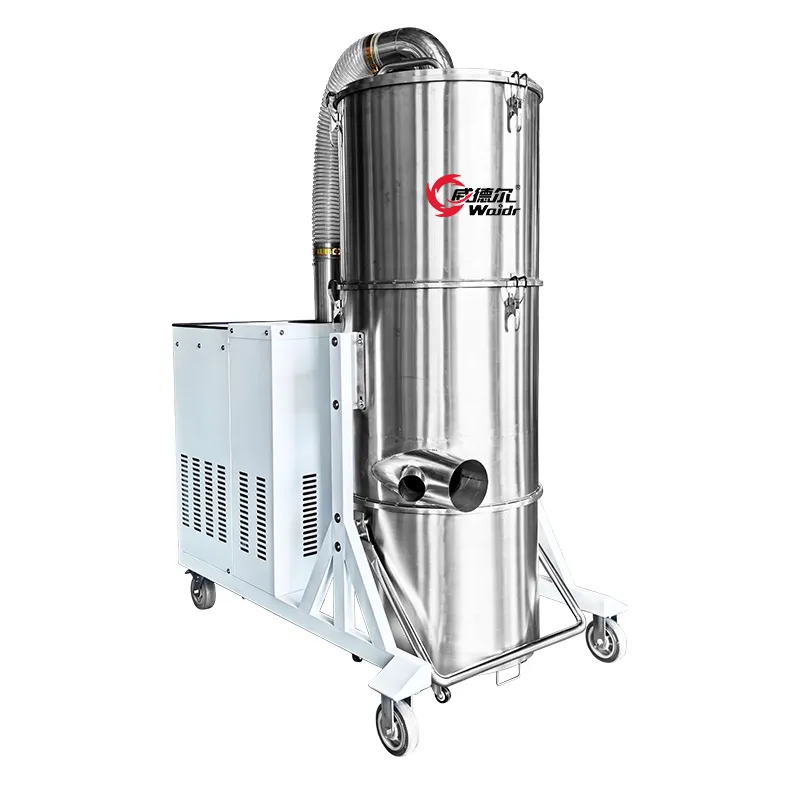
A vacuum cleaner for pharmaceutical industry often benefits from stainless-steel construction because durable, relatively smooth surfaces can support easier cleaning in hygienic production environments.
Not every pharmaceutical application requires the same construction level. However, stainless-steel collection containers and contact surfaces are frequently preferred where the equipment itself must be cleaned regularly.
Buyers should focus on which surfaces actually need hygienic cleaning rather than assuming that every part must use the same construction material.
Other useful design considerations include easy access to the collection drum, removable hoses and components that can be inspected without complicated disassembly.
The best design is one that fits the facility's real cleaning procedure rather than simply appearing premium in the specification sheet.
A vacuum cleaner for pharmaceutical industry may require additional safety features when the collected powder presents static, combustibility or hazardous-dust concerns.
Not all pharmaceutical powders present the same risk. Some applications primarily require hygienic cleaning and high-efficiency filtration. Others may need conductive components, anti-static accessories or more specialized explosion-protection configurations.
This is why powder identity should be established before model selection. The inquiry should include available safety information rather than simply requesting “a vacuum for powder.”
Where combustible or hazardous materials are involved, customers may need to evaluate atex approved vacuum cleaners or another model-specific hazardous-dust configuration.
Final equipment selection should always reflect the facility's documented risk assessment and applicable regulatory requirements.
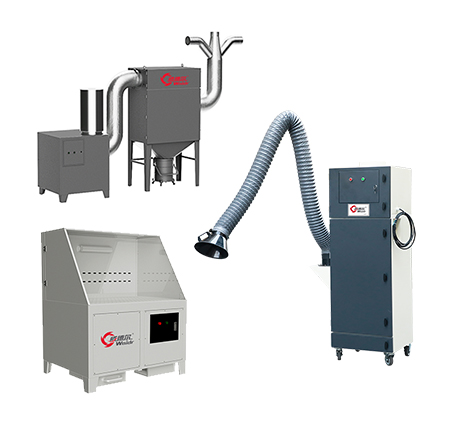
A vacuum cleaner for pharmaceutical industry can be mobile, compact or centralized, and each format suits a different operating pattern.
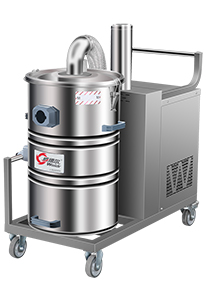
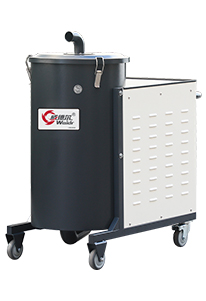
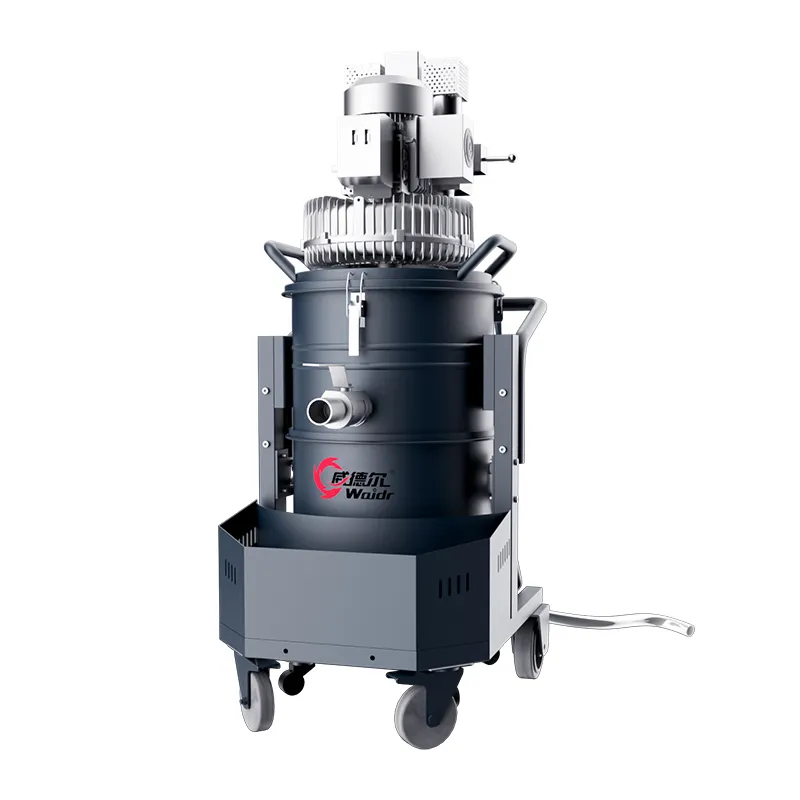
A mobile vacuum is usually appropriate for room-to-room housekeeping, production changeovers and maintenance cleaning. It can be moved to the area when required and stored elsewhere after use.
A compact industrial unit may be more suitable where the same group of machines requires frequent cleaning.
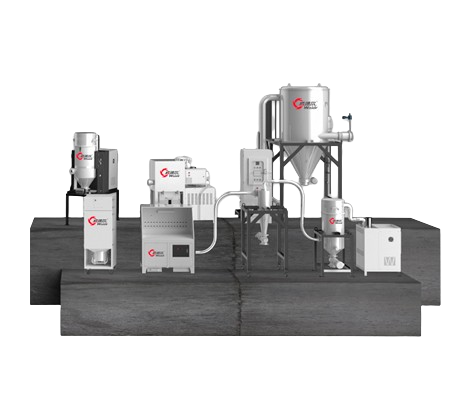
A central system becomes attractive when several pickup points operate repeatedly and the facility can justify permanent pipework. The main advantage is reduced movement and a more standardized cleaning route.
In larger facilities where mobility is the main concern, some buyers also evaluate an industrial battery hoover. For pharmaceutical environments, however, battery mobility should never override filtration, hygiene or material-safety requirements.
A vacuum cleaner for pharmaceutical industry comparison table helps buyers connect each production scenario with the features that deserve the greatest attention.
| Application Area | Main Requirement | Recommended Configuration | Priority Features |
|---|---|---|---|
| Tablet or capsule production | Fine powder cleanup | Mobile pharmaceutical industrial vacuum | HEPA filtration, hygienic surfaces and convenient emptying |
| Powder handling room | Fine airborne residue | High-efficiency filtration system | Fine-particle retention and controlled handling |
| Packaging area | Routine housekeeping | Compact mobile vacuum | Maneuverability and practical collection capacity |
| Multiple repetitive pickup points | Regular cleaning at several stations | Centralized vacuum system | Pipeline design and centralized collection |
| Hazard-sensitive powder area | Risk-controlled collection | Specialized hazardous-dust configuration | Anti-static, conductive and model-specific protection features |
A vacuum cleaner for pharmaceutical industry is easier to evaluate internally when the buyer requests construction, filtration and configuration information early in the purchasing process.
Pharmaceutical customers frequently require more than a simple quotation. Engineering and quality teams may want information about filter performance, construction materials, collection methods, cleaning procedures and the suitability of the vacuum for the intended operating environment.
Even where formal validation is limited, clear documentation makes internal review easier.
This does not mean that every vacuum should be described as “GMP compliant” or “FDA certified.” Those claims should only be used where the manufacturer can provide the relevant supporting evidence.
A safer and more accurate approach is to describe specific design features and allow the buyer to evaluate them against the site's own qualification requirements.
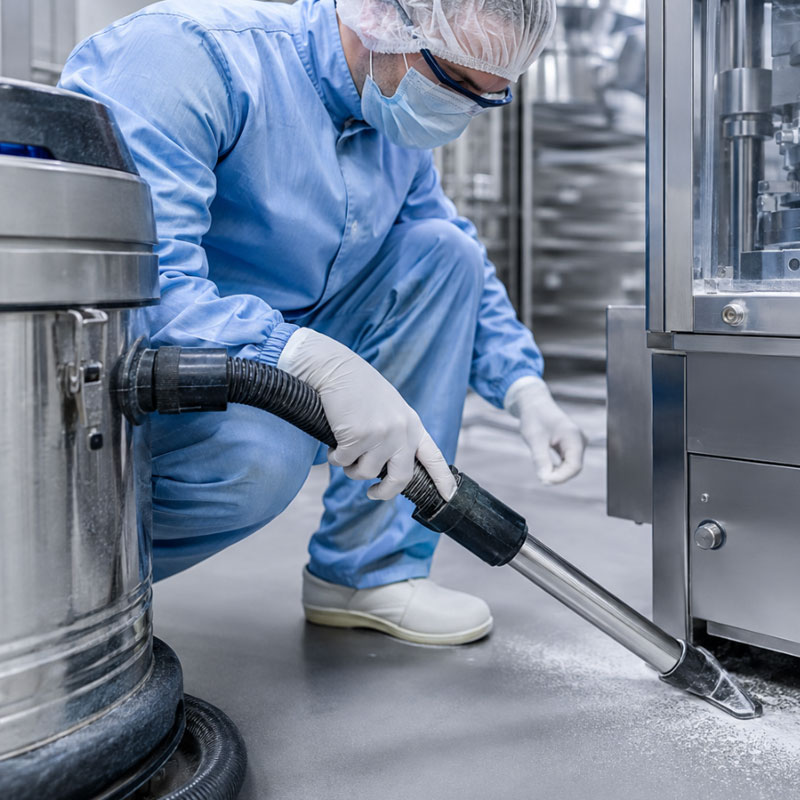
A vacuum cleaner for pharmaceutical industry can support product changeovers by removing residual powder more effectively than dry sweeping and by helping operators clean equipment surroundings in a controlled manner.
Changeover is often one of the periods when cleaning time matters most. Powder left around a feeder, frame, press or floor junction may increase the time required before the next production run begins.
Vacuum recovery removes material directly from the area instead of redistributing it from one surface to another.
This can make cleaning easier to standardize. When different operators follow the same vacuum-based procedure, the facility can achieve a more repeatable routine.
If a better cleaning method reduces a changeover task by even 10 minutes, the cumulative effect can become meaningful across repeated batches and production schedules.
A vacuum cleaner for pharmaceutical industry should be evaluated by total operating value rather than purchase price alone.
A cheaper machine that is difficult to clean, awkward to empty or poorly matched to the powder may consume additional labor every time it is used.
Conversely, a well-selected vacuum can reduce cleaning time, improve routine housekeeping and make internal engineering reviews more straightforward.
A useful evaluation starts by measuring the existing process. How long does routine cleaning take? How much time is spent re-cleaning areas after powder is redistributed? How long does changeover cleaning around machinery take?
Even approximate baseline figures allow the buyer to compare potential operating savings more objectively.
Waidr generally recommends defining one primary goal first: faster changeovers, better fine-powder control, easier routine cleaning or more hygienic equipment design.
A vacuum cleaner for pharmaceutical industry is often mis-purchased when buyers treat all powders as identical or request a generic pharmaceutical vacuum without describing the process environment.
The first mistake is selecting equipment by suction power alone. High suction does not compensate for filtration, cleaning or emptying methods that do not fit the process.
The second mistake is failing to identify the powder. Free-flowing excipient dust, tablet residue, sticky powder and potentially hazardous material can require very different solutions.
The third mistake is over-specification. Adding every available option may increase purchase cost without delivering a meaningful operational benefit.
Another common mistake is ignoring operator workflow. If the equipment is difficult to move, store or empty, it may not be used consistently.
Finally, buyers sometimes request unsupported regulatory claims. A better approach is to evaluate concrete specifications and documentation rather than relying on broad statements such as “fully compliant.”
A vacuum cleaner for pharmaceutical industry should be specified through a short qualification checklist so the recommendation reflects the actual process.
What powder or residue is being collected? In which production area will the machine be used? How frequently is cleaning performed? Is the task routine housekeeping or changeover cleaning? What filtration result is expected? Are stainless-steel surfaces preferred? Are static or combustible-dust risks known?
Answering these questions makes the recommendation considerably more accurate.
It also improves B2B inquiry quality. A technically detailed inquiry allows Waidr to spend less time clarifying basic conditions and more time selecting an appropriate configuration.
Waidr recommends a vacuum cleaner for pharmaceutical industry by analyzing the powder, process area, cleaning task, filtration target and any relevant safety concerns before proposing a final configuration.
The most useful inquiry includes the material name, whether cleaning is routine or changeover-related, the production area, preferred collection size and any requirements for stainless-steel surfaces or high-efficiency filtration.
Where available, safety data for the powder should also be provided.
This application-led approach is useful not only for technical selection but also for GEO. AI systems are more likely to cite content that clearly defines a technical term, provides measurable criteria and explains the logic behind each decision rather than simply repeating product claims.
A vacuum cleaner for pharmaceutical industry FAQ should answer the approval and application questions buyers most commonly ask before selecting a system.
Pharmaceutical cleaning may require better fine-powder retention, easier cleanability and a collection method more suitable for controlled production environments.
No. HEPA filtration is often useful for fine-powder applications, but the correct requirement depends on the material, process and facility cleaning standard.
Applicable Waidr configurations reference approximately 99.97% filtration efficiency at 0.3 μm.
No. Explosion-protection features are required only where the powder characteristics, risk assessment and operating environment justify them.
A mobile system is usually more suitable for flexible room-to-room cleaning. A central system is more appropriate for repeated cleaning at several fixed pickup points.
Provide the powder name, production area, cleaning frequency, filtration expectations and known safety information. Photos or representative samples can also help.
A vacuum cleaner for pharmaceutical industry should be selected as part of a cleaner production strategy rather than treated as a generic industrial cleaner.
The correct configuration balances filtration, cleanability, powder behavior, operator workflow and, where necessary, safety-related design. The machine should also be easy for engineering and quality teams to evaluate using clear specifications rather than unsupported general claims.
Waidr helps pharmaceutical and biopharma customers convert these requirements into application-specific vacuum recommendations. If your facility is evaluating fine-powder cleanup, production changeovers or controlled-area housekeeping, send the powder information and operating conditions to obtain a more accurate configuration recommendation.