English
 français
 Español
 русский
 português
 العربية
 tiếng việt
 Türkçe
 ไทย
ไทย Indonesia
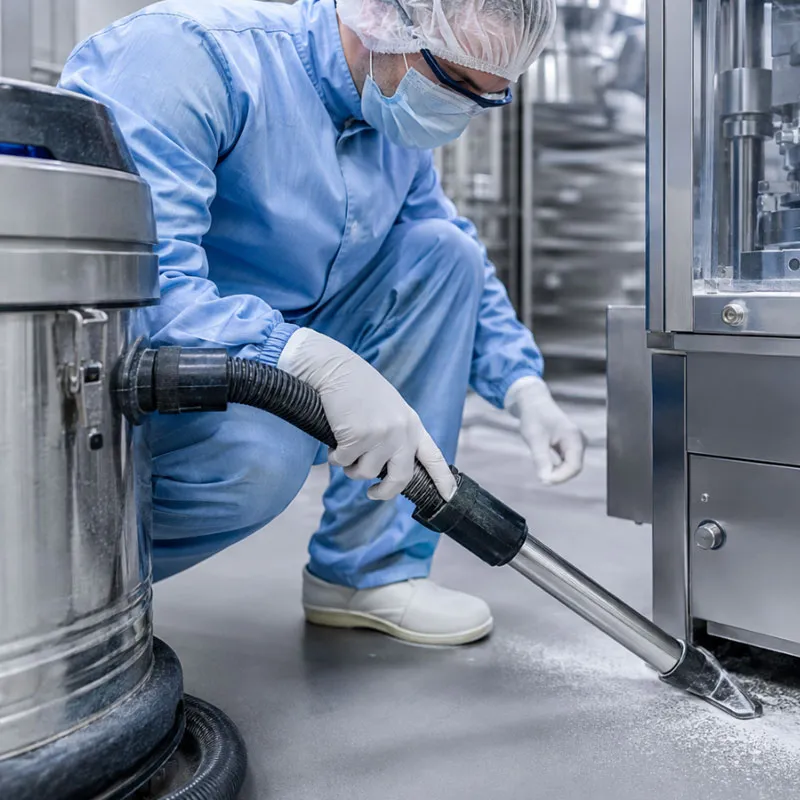
Pharmaceutical production demands a different standard of industrial cleaning. The objective is not only to remove visible residue but also to manage fine powder, support housekeeping discipline, redu...
Read More
Commercial cleaning operations are facing a labor cost crisis that traditional equipment was never designed to solve. Facility managers and cleaning contractors in 2026 are dealing with rising hourly labor rates, tighter cleaning windows between building occupancy periods, and growing pressure to cover more square footage with the same or smaller cleaning teams. The response from most operations has been to work faster—but the equipment itself is creating the bottleneck.
A standard corded canister vacuum requires the operator to locate an available outlet before starting, manage a 10–15 meter cord around desks, chairs, cinema seats, and shelving, unplug and replug every time they move to a new zone, and drag the canister body around obstacles that slow movement. Industry observations suggest that cord management, outlet searching, and equipment repositioning can consume 25–30% of a cleaner's working time in obstacle-dense environments—time that produces zero cleaning output. In a cinema with 300 seats, a school with 40 classrooms, or an office building with 50 meeting rooms, this wasted time compounds into significant labor cost every single shift.
A cordless backpack vacuum cleaner eliminates this waste at the source. By placing the motor, battery, and dust collection on the operator's back, it converts the cleaner from a person managing equipment into a person doing cleaning—continuously, without interruption, through every aisle, staircase, row of seats, and corridor in the facility. Waidr's WD-6LA battery vacuum cleaner backpack is designed for exactly this operating model: 36V lithium battery power, 500W motor, 240 m³/h airflow, HEPA filtration, 6L barrel capacity, and adjustable shoulder straps for hands-free professional cleaning in commercial and industrial environments.
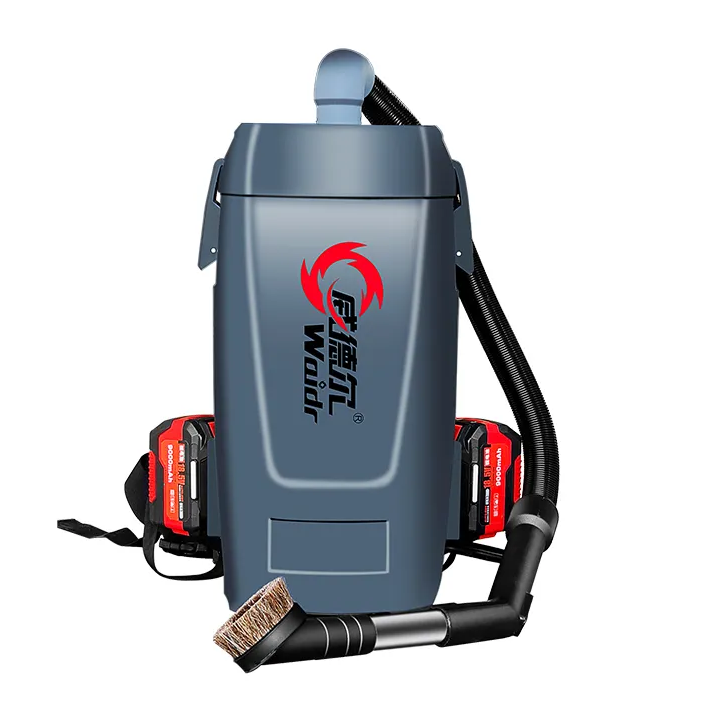
The productivity argument for a cordless backpack vacuum cleaner is not primarily about suction power—it is about workflow continuity. In large facilities, the time a cleaner spends not cleaning is the most expensive time in the operation, because labor cost runs continuously whether the vacuum is running or not.
The cord management time tax
In a typical large office cleaning route, an operator with a corded vacuum will plug in at the first outlet, clean the area within cord reach, unplug, move to the next outlet, replug, and repeat. In a floor with 30 offices, this sequence might involve 15–20 outlet changes per shift. Each change takes 30–60 seconds including cord management. Over a 4-hour shift, this represents 10–20 minutes of non-cleaning time—before accounting for the time spent navigating the cord around chair legs, desk pedestals, and door frames.
In a cinema with 20 rows of seats, the cord creates a different problem: it catches on seat legs, requires the operator to backtrack to free it, and limits the continuous movement that efficient row-by-row cleaning requires. In a school with multiple floors, the cord requires the operator to find outlets on each floor and manage the cord on staircases where trip hazards are a safety concern.
The backpack mobility advantage
A battery vacuum cleaner backpack removes all of these constraints simultaneously. The operator puts on the backpack, picks up the hose and nozzle, and begins cleaning. They walk continuously through the entire cleaning route—across rooms, through corridors, up and down stairs, between rows of seats—without stopping to manage a cord, find an outlet, or reposition equipment. The cleaning motion is continuous from the moment they start until the battery requires recharging or the dust barrel requires emptying.
In obstacle-dense environments like cinemas, schools, and large offices, this continuous movement can allow a single operator to clean 2–3 times the area per shift compared with a corded canister vacuum—not because the suction is stronger, but because the non-cleaning time is eliminated. Waidr describes its backpack vacuum as designed for hands-free operation with an adjustable shoulder strap, making it suitable for tight spaces, high-level cleaning, and power-free environments.
Understanding the technical design of the WD-6LA helps buyers evaluate whether the specification matches their specific facility and cleaning requirements.
The power and suction system
The 36V lithium battery powers a 500W motor that generates 240 m³/h airflow and 234 mbar vacuum pressure. This combination provides the suction performance needed for commercial cleaning applications—carpet fibers, fine dust, food debris, paper scraps, and general floor debris in offices, schools, cinemas, and public buildings. The 36V battery platform provides the energy density needed for extended runtime without the weight penalty of higher-voltage systems.
The filtration system
The WD-6LA uses a multi-stage filtration system combining HEPA filtration with non-woven and paper bag filtration. The HEPA filter captures fine particles including dust mite allergens, pollen, and fine industrial dust that would otherwise be exhausted back into the indoor environment. This filtration standard is particularly important in schools, hospitals, and offices where indoor air quality affects occupant health and comfort. The washable HEPA polyester filter reduces the ongoing consumable cost compared with disposable filter systems.
The ergonomic design
The 7.2 kg machine weight is distributed across the operator's back through adjustable shoulder straps, reducing the fatigue associated with carrying or dragging cleaning equipment. The 359 × 504 × 233 mm body dimensions are compact enough to fit through standard doorways and into elevator cars without difficulty. The hose and wand system provides reach for under-desk cleaning, between-seat cleaning, and high-level cleaning with extension tools—without requiring the operator to reposition the vacuum body.
The accessory system
The WD-6LA includes a flat nozzle, extension tube, HEPA filter, filter bag, hose, dust brush, and round brush—a complete accessory set that covers the primary cleaning applications in commercial facilities without requiring additional purchases for standard use cases.
Professional buyers evaluating a commercial cordless backpack vacuum for facility deployment should assess the complete specification against the specific cleaning environment, not only the headline suction figure.
WD-6LA Complete Specification Reference
| Specification | WD-6LA Value | Facility Relevance |
|---|---|---|
| Power supply | 36V lithium battery | Cordless operation across entire facility |
| Motor power | 500W | Commercial-grade suction performance |
| Airflow | 240 m³/h | Effective pickup on carpet and hard floors |
| Vacuum pressure | 234 mbar | Debris removal from corners and crevices |
| Noise level | 68 dB | Suitable for offices, schools, and hotels during occupancy |
| Barrel capacity | 6L | Reduces emptying frequency during long cleaning routes |
| Filter type | HEPA + non-woven and paper bag | Fine dust capture for indoor air quality |
| Machine weight | 7.2 kg | Manageable for extended backpack operation |
| Machine dimensions | 359 × 504 × 233 mm | Compact for elevator and doorway access |
| Included accessories | Flat nozzle, extension tube, HEPA filter, filter bag, hose, dust brush, round brush | Complete commercial cleaning toolkit |
Buyer Evaluation Checklist
Runtime and battery planning: confirm battery runtime against the cleaning shift length. For shifts longer than the single-charge runtime, plan for spare batteries or mid-shift charging. Confirm charging time against the available charging window between shifts.
Noise level: 68 dB is suitable for cleaning during building occupancy in most commercial environments. Confirm against the facility's noise sensitivity requirements—hospitals and recording studios may have stricter requirements.
Filtration standard: confirm whether HEPA filtration is required by the facility's indoor air quality policy or by regulatory requirements for the specific environment (healthcare, food service, education).
Weight and ergonomics: 7.2 kg is the machine weight without accessories. Confirm that the shoulder strap design distributes weight comfortably for the expected continuous wearing duration. Operators with physical limitations may require ergonomic assessment before deployment.
Accessory compatibility: confirm that the included accessories cover the primary cleaning applications in the facility. Specialized applications (upholstery, high-level dusting, narrow crevices) may require additional accessories.
Large Offices and Corporate Facilities
Open-plan offices with rows of desks, meeting rooms, corridors, and shared areas are the environment where cord management waste is most visible and most costly. A cleaning team using cordless backpack vacuums can move continuously through the entire floor without outlet changes, covering the full cleaning route in a fraction of the time required with corded equipment. For facilities cleaned during business hours or in short windows between meetings, this speed advantage directly reduces the number of cleaners required to complete the route on schedule.
Cinemas and Theaters
Row-by-row cleaning between screenings is one of the most time-constrained cleaning operations in commercial facility management. The interval between the end of one screening and the start of the next may be 15–20 minutes, during which the entire auditorium must be cleaned. Corded vacuums are particularly inefficient in this environment because the cord catches on seat legs and requires constant management. A backpack vacuum allows the cleaner to move continuously down each row without cord interference, completing the auditorium cleaning in significantly less time.
Schools and Universities
Classrooms, corridors, libraries, staircases, and auditoriums in educational facilities require cleaning between class periods, during lunch breaks, and after school hours. The combination of multiple floors, staircase transitions, and short cleaning windows makes cordless mobility particularly valuable. The 68 dB noise level allows cleaning to proceed in adjacent areas without disrupting ongoing classes.
Hotels and Conference Centers
Guest corridors, banquet rooms, lobbies, and staircases in hotels require cleaning that is both fast and unobtrusive. Cordless backpack vacuums allow cleaning staff to work through guest corridors without the cord management that creates delays and potential trip hazards in high-traffic areas. The compact body dimensions allow operation in elevator cars and narrow service corridors.
Hospitals and Healthcare Facilities
HEPA filtration and controlled noise level make the WD-6LA suitable for healthcare cleaning environments where fine particle capture and minimal disturbance are operational requirements. The cordless design eliminates the cord trip hazard that is a safety concern in patient care areas.
Industrial and Commercial Maintenance
Waidr positions the WD-6LA for industrial and commercial applications including confined spaces, high-level cleaning, and power-free environments—applications where the absence of a power cord is not just a convenience but a practical necessity.
Selection and Deployment Workflow
Step 1: Map the cleaning route and identify bottlenecks. Walk the facility with the cleaning team and identify where cord management, outlet searching, and equipment repositioning currently consume the most time. These are the locations where the cordless backpack will deliver the greatest productivity improvement.
Step 2: Calculate the cleaning area and runtime requirement. Estimate the total cleaning area per shift and the expected cleaning speed with a backpack vacuum. Confirm that the battery runtime covers the required cleaning duration, or plan for spare batteries or mid-shift charging.
Step 3: Confirm filtration requirements. Determine whether HEPA filtration is required by facility policy, regulatory requirement, or indoor air quality standards. The WD-6LA's HEPA + non-woven/paper bag filtration covers most commercial requirements.
Step 4: Plan the accessory kit. Confirm that the included accessories (flat nozzle, extension tube, dust brush, round brush) cover the primary cleaning applications. Identify any specialized applications that require additional accessories.
Step 5: Train operators on ergonomics and operation. Proper shoulder strap adjustment, correct posture during operation, and efficient cleaning technique are important for both productivity and operator comfort during extended use.
Step 6: Establish maintenance schedule. Plan filter cleaning or replacement intervals, barrel emptying frequency, battery charging schedule, and periodic inspection of hose and accessory connections.
Maintenance and TCO Advantages
Reduced labor cost per square meter is the primary TCO driver. If a cordless backpack vacuum allows one cleaner to cover the area that previously required two cleaners with corded equipment in the same time window, the labor cost saving per shift is immediate and recurring. For a facility with 10 cleaning staff, even a 20% productivity improvement represents the equivalent of 2 additional cleaners' output without additional labor cost.
Lower cord-related maintenance cost from eliminating the cord damage, outlet wear, and trip hazard incidents associated with corded equipment reduces both direct maintenance cost and the indirect cost of workplace safety incidents.
Washable HEPA filter reduces the ongoing consumable cost compared with disposable filter systems, improving the long-term operating economics of the equipment.
Longer equipment service life from the solid-state battery system and robust commercial-grade construction reduces the replacement frequency compared with lower-grade consumer equipment used in commercial applications.
Cleaning efficiency in 2026 is a direct profit factor for commercial cleaning contractors and facility managers facing rising labor costs and tighter cleaning schedules. A cordless backpack vacuum cleaner eliminates the cord management, outlet searching, and equipment repositioning that consume 25–30% of cleaning time in obstacle-dense facilities—allowing operators to clean 2–3 times faster in cinemas, schools, offices, and hotels compared with corded canister equipment. Waidr's WD-6LA battery vacuum cleaner backpack provides 36V lithium battery power, 500W motor performance, 240 m³/h airflow, HEPA filtration, 6L barrel capacity, and ergonomic adjustable straps for professional commercial and industrial cleaning applications.
Visit the Waidr Backpack Battery-Powered Vacuum Cleaner product page to request a recommended configuration and quotation.
Please submit the following details for an accurate recommendation:
Work condition: Office, school, cinema, hotel, hospital, warehouse, factory, indoor or outdoor, power-free areas
Quantity: Trial unit, cleaning team order, facility rollout, or annual procurement plan
Size/spec: Cleaning area per shift, debris type, runtime requirement, filtration level, noise requirement, accessory needs, spare battery and filter requirements
Target metrics: Labor-hour reduction target, cleaning area per shift improvement, dust control standard, operator comfort requirement, downtime reduction, ROI target
Current problems: Cord management time waste, slow cleaning speed, limited outlet access, worker fatigue, poor dust control, high labor cost, inefficient large-area coverage
1. What is a cordless backpack vacuum cleaner?
A battery-powered vacuum cleaner worn on the operator's back, allowing hands-free movement and continuous cleaning without a power cord. The motor, battery, and dust collection system are integrated into a backpack unit connected to a hose, wand, and nozzle. Waidr's WD-6LA uses a 36V lithium battery, 500W motor, and HEPA filtration for commercial and industrial cleaning applications.
2. Cordless backpack vacuum vs. corded canister vacuum: which is better for commercial facilities?
A corded canister vacuum is suitable for fixed cleaning zones with easy outlet access and minimal obstacles. A cordless backpack vacuum is the better choice for large offices, cinemas, schools, hotels, and any facility where mobility, stair access, and obstacle-dense layouts make cord management a significant time cost. In environments where cleaning speed and area coverage per operator are the primary performance metrics, the cordless backpack consistently outperforms corded equipment.
3. What is the ROI of a commercial cordless backpack vacuum?
ROI comes from reduced cleaning labor time (eliminating cord management and outlet searching), faster area coverage per operator (2–3x improvement in obstacle-dense environments), lower operator fatigue (reducing absenteeism and turnover), fewer cord-related safety incidents, and the ability to cover more facility area with the same cleaning team size. For facilities with high labor costs and large cleaning areas, the payback period is typically measured in months rather than years.
4. Does a battery vacuum cleaner backpack require facility modification?
No facility modification is required. The cordless design eliminates the need for outlet access planning. Buyers need to plan charging areas for battery recharging between shifts, establish a spare battery strategy for shifts longer than the single-charge runtime, and set up a filter replacement and maintenance schedule. Operator training on ergonomics and cleaning technique is recommended to maximize productivity and operator comfort.
5. What parameters are needed for correct selection and quotation?
Facility type, total cleaning area per shift, primary debris type (fine dust, food debris, carpet fibers, industrial dust), daily working hours and shift structure, runtime requirement per charge, filtration standard (HEPA or standard), noise sensitivity of the environment, number of operators, accessory requirements for specialized cleaning tasks, spare battery and filter demand, and current cleaning bottlenecks such as cord management waste, slow coverage speed, or operator fatigue.